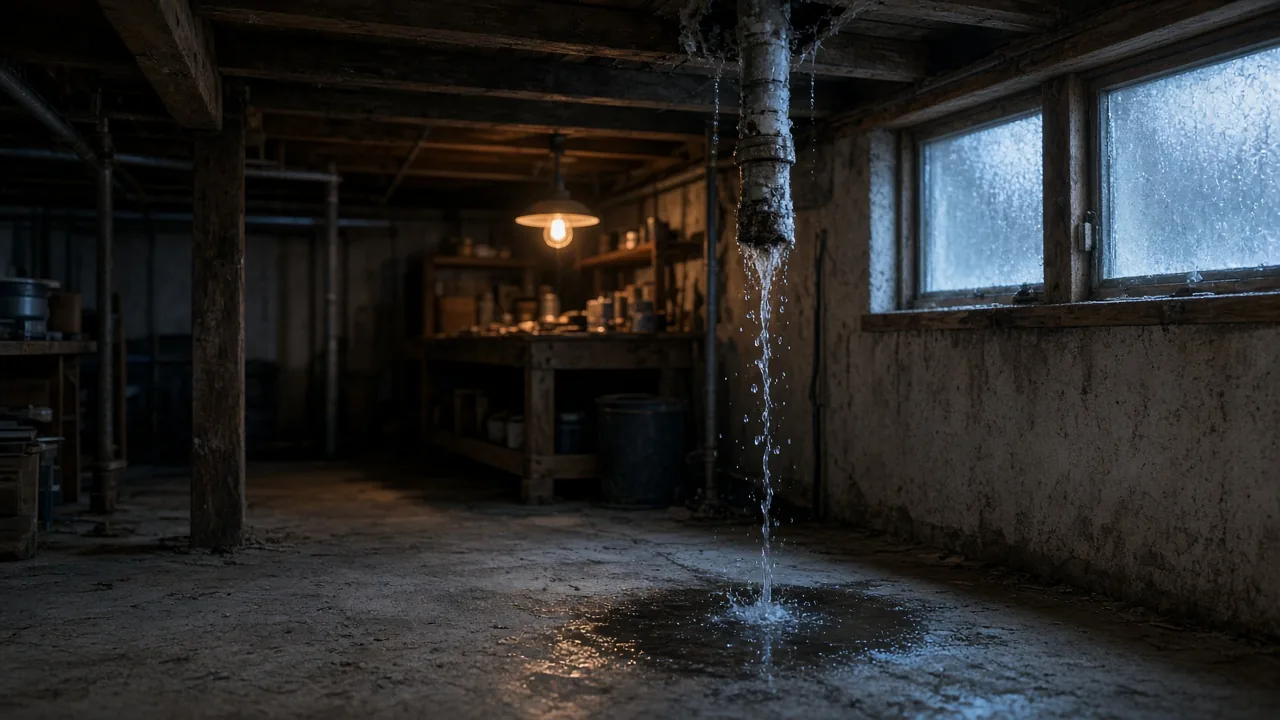
When Winter Gets Inside: Spokane Water Damage Restoration
Spokane water damage restoration is mostly a winter business. Pipes freeze in crawl spaces and outside walls, snow and ice back water up under roofing, and the thaw reveals leaks that started weeks earlier. Our team extracts the water, dries the structure with measured results and rebuilds what was lost.
Call (509) 555-0119 when you find water where it shouldn't be.
Prefer to talk? (509) 555-0119
- Water extraction
- Moisture mapping
- Structural drying
- Repairs and rebuild
Our Services
- Spokane frozen pipe cleanup when a line splits in the cold.
- Ceiling leak repair in Spokane for stains, drips and sagging drywall.
- Spokane mold remediation for growth left behind by slow leaks.
We also handle water heater failures, appliance leaks and basement water.
Mold Remediation
Musty basement, attic growth or mold after a leak in your Spokane home? We find the moisture, contain the work area and remove mold properly. Call.
Learn moreFrozen Pipes
A frozen pipe split in your Spokane crawl space, basement or wall? We extract the water, dry framing and floors and handle repairs. Phone us now.
Learn moreCeiling Leaks
Brown stain, drip or sagging ceiling in your Spokane home? We find the source, dry the attic and ceiling cavity and replace damaged drywall. Call Us.
Learn more
Old Houses, Cold Pipes
Spokane's housing skews old. The Census Bureau's 2024 estimate puts the median build year at 1961. About half of homes were built before 1960, and more than a quarter before 1940. In houses that age, plumbing often runs through crawl spaces, basements and exterior walls that were never meant to stay warm.
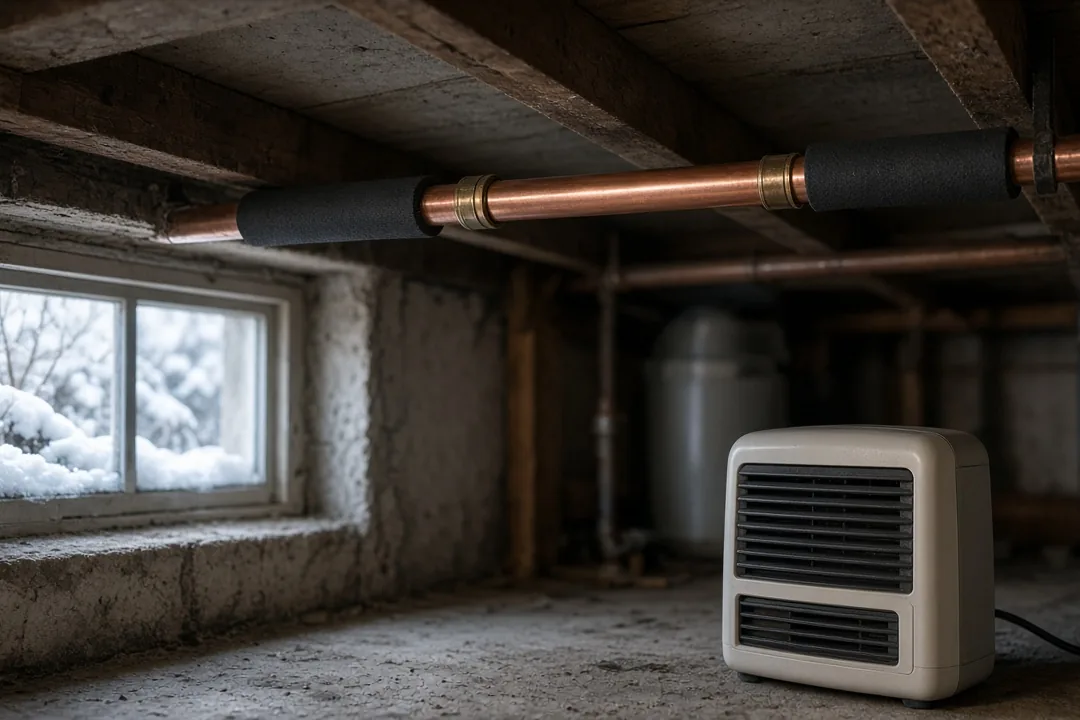
The City's Water Department says freezing temperatures are common in winter, and it recommends keeping the house above 55°F even when you're away.
The 1996 Ice Storm
On November 19, 1996, several hours of freezing rain left up to an inch of ice on trees, roads, buildings and vehicles. The National Weather Service office in Spokane later wrote that many structures collapsed or were severely damaged, more than 100,000 homes and businesses lost power, and some people went without it for up to two weeks. Damage topped $22 million. Long outages in winter mean cold houses, and cold houses mean frozen pipes.
The Owner's Pipes
Under Spokane Municipal Code 13.04.1002, service pipes and fixtures on private property must be kept in good repair and protected from freezing at the owner's or lessee's expense. The owner is also responsible for damage caused by leaks and breaks. Know where your shutoff valve is before it's needed.
When the Thaw Shows the Damage
A pipe can freeze and split during a cold night and not leak a drop until the afternoon it warms up. Ice on the roof works the same way: the water waits until melt. That's why a lot of winter damage gets found days late, in a basement nobody visited or a ceiling below a closed-off room.
After any hard freeze, walk the house. Look at crawl-space access points, basement ceilings under bathrooms, the walls behind kitchen sinks and any room with a ceiling under the attic. Check the water meter with every fixture off; if it's still moving, something is leaking. Catching it a day earlier can save drywall, flooring and the insulation above.
How We Dry a House
- Stop the water and make wet areas electrically safe.
- Extract standing water from floors, carpet and basements.
- Map moisture with meters and a thermal camera.
- Remove only what won't dry: soaked pad, saturated drywall, wet insulation.
- Run dehumidifiers and air movers, checking readings each day.
- Rebuild when readings match unaffected areas.
Plaster walls and original wood floors get a slower, closely monitored drying plan.
Neighborhoods
We work throughout Spokane, from Hillyard and Logan to Peaceful Valley, West Central and Manito/Cannon Hill.
Call (509) 555-0119 and we'll walk you through the first steps.
Frequently asked questions
Who pays when a frozen pipe floods the house?
Under city code, pipes on private property are the owner's responsibility. Your homeowners policy may cover sudden water damage.
How long does drying take in winter?
Usually several days, depending on materials. We check readings daily and tell you when it's done.
Can I stay home during drying?
Usually, if the damage is limited and utilities are safe.
Three steps to dry
- 1
Share the details
Call (509) 555-0119 and describe where the water came from and which rooms are affected.
- 2
Pick a time
We follow up to confirm the details and set an inspection time that works for you.
- 3
Dry-out and repairs
Water is extracted, moisture is measured and the structure is dried before repairs begin.